Buying a Rural Property: Essential Survey Considerations
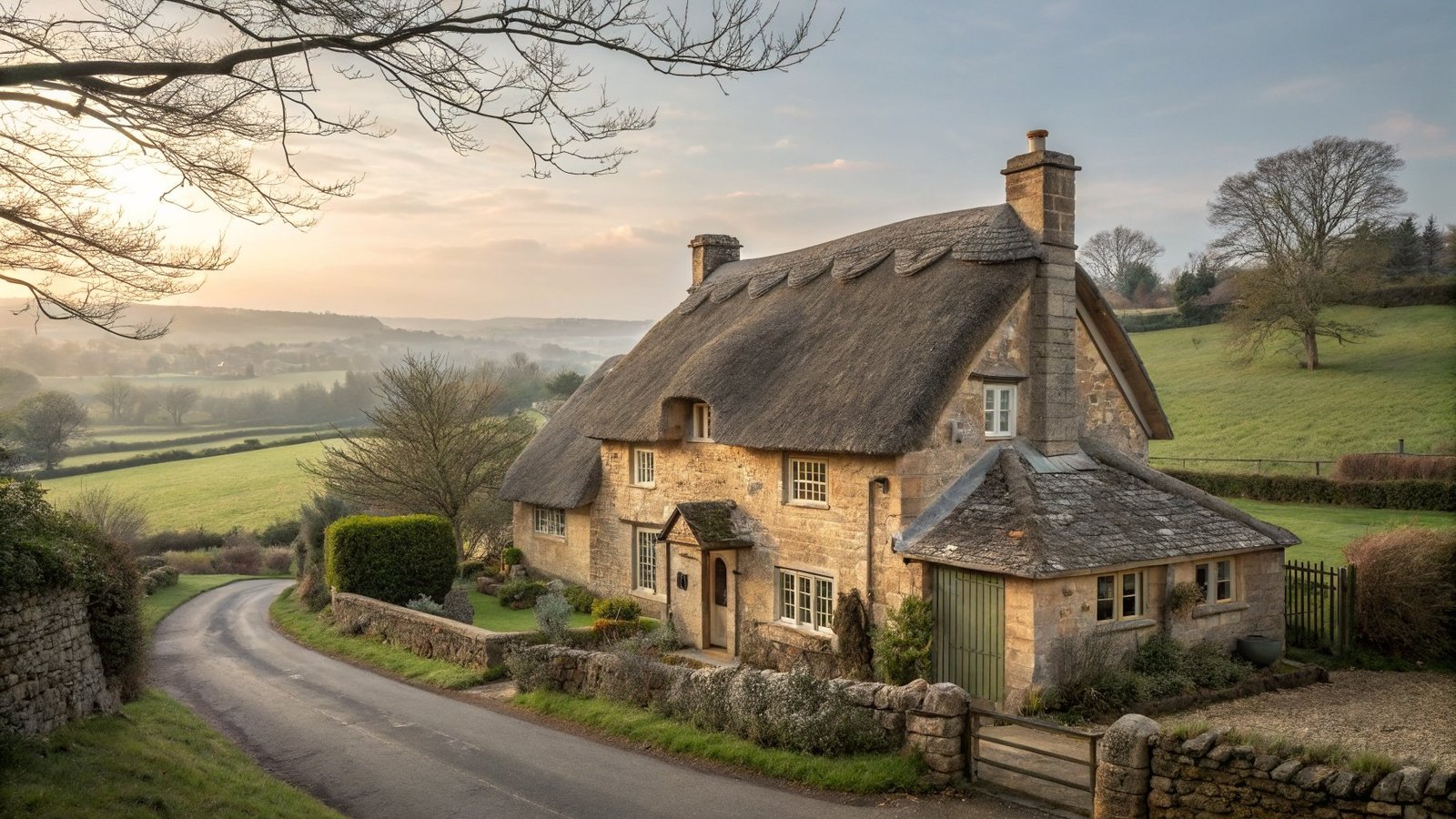
The dream of rural living attracts many buyers – peace, space, and connection with nature. But buying a property in the countryside comes with unique challenges that urban and suburban properties don't face. From septic tanks to private water supplies, access rights to agricultural buildings, rural homes require specialist survey considerations. This guide explains what your house survey should cover when you're buying a rural property.
Why Rural Properties Need Specialist Attention
Rural properties differ fundamentally from town houses. They often lack mains services, have extensive grounds requiring maintenance, and may include agricultural buildings with specialist uses. When you're buying a house in a rural location, qualified surveyors need to assess aspects that simply don't apply to urban properties.
Tom and Sarah learned this the hard way. They bought a beautiful cottage in rural Devon based on a basic survey that focused on the building itself. After moving in, they discovered their septic tank needed replacing (£8,000), the private water supply was contaminated (£3,000 treatment system), and their access track had no maintenance agreement (ongoing neighbor disputes). A comprehensive rural survey would have identified these issues beforehand.
Drainage: Septic Tanks and Treatment Plants
Most rural properties aren't connected to mains sewerage. Instead, they use private drainage systems. Your survey must assess these carefully.
Types of Private Drainage Systems
Septic Tanks: Basic systems where solids settle and liquids drain to soakaway:
- Older systems (pre-2020) may not comply with current regulations
- Must discharge to drainage field, not directly to ditches/watercourses
- Require emptying every 12-18 months (£100-200)
- Lifespan typically 20-40 years depending on material and maintenance
Package Treatment Plants: Modern systems treating sewage to higher standards:
- More expensive to install (£5,000-12,000) but often required by regulations
- Need electricity to operate (ongoing cost)
- Require annual servicing (£150-300)
- Moving parts that can fail
- May discharge to water courses if properly consented
Cesspits: Simple holding tanks requiring regular emptying:
- No treatment of sewage
- Need frequent emptying depending on household size (£150-300 per empty)
- Annual costs can be £1,000-2,000 for family households
- Increasingly uncommon and expensive to run
What Surveys Should Check
Chartered surveyors assessing rural properties should investigate:
- Type and age of drainage system
- Location of septic tank or treatment plant (must be documented)
- Condition of visible components
- Size adequate for property? (bedrooms determine required capacity)
- Evidence of maintenance (emptying records)
- Drainage field location and condition
- Any signs of system failure (sewage smells, soggy ground, backing up)
- Compliance with current regulations
- Environment Agency permits if discharging to water courses
- Recent servicing records for treatment plants
Common Problems and Costs
- Failed septic tank: Replacement costs £3,000-8,000
- Collapsed drainage field: New soakaway £2,000-5,000
- Treatment plant pump failure: £500-1,500 repair
- Non-compliant system: Upgrading to meet regulations £5,000-15,000
- Groundwater contamination: Can prevent soakaway systems working, requiring expensive treatment plant
Regulatory Requirements
Since 2020, stricter regulations apply:
- Septic tanks cannot discharge directly to water courses
- Systems within 50m of water sources need permits
- New installations must meet British Standard BS 6297:2007
- Replacement often requires Environment Agency approval
- Non-compliant systems must be upgraded when properties are sold or significantly altered
Your survey should identify compliance issues and factor upgrade costs into negotiations.
Water Supply Systems
Rural properties may have private water supplies from wells, boreholes, or springs rather than mains connection.
Types of Private Water Supply
- Boreholes: Drilled wells typically 20-100m deep accessing groundwater
- Shallow wells: Traditional dug wells less than 10m deep
- Springs: Natural water sources
- Surface water: Streams or rivers (rare for domestic use due to treatment needs)
- Shared supplies: Multiple properties sharing a private system
Survey Considerations
Private water supplies need careful assessment:
- Type and location of water source
- Pump system condition and age
- Storage tank capacity and condition
- Treatment systems (UV filters, softeners, etc.)
- Water quality (bacteriological and chemical testing essential)
- Adequacy of supply (yield sufficient for household needs?)
- Electricity supply for pumps (and backup if power fails)
- Maintenance requirements and costs
- Shared supply agreements if applicable
- Rights to extract water (legal documentation)
Water Testing is Essential
Never buy a rural property with private water without testing. Basic tests cost £100-200 and check for:
- Bacteria (E. coli, coliforms indicating contamination)
- Nitrates (from agricultural runoff)
- pH levels
- Hardness
- Heavy metals if in mining areas
- Pesticides if near agricultural land
Contaminated water supplies require treatment systems costing £1,000-5,000+.
Common Water Supply Problems
- Insufficient yield: Supply dries up in summer or can't meet demand
- Contamination: Bacterial or chemical pollution requiring treatment
- Pump failure: Replacement costs £1,000-3,000
- Shared supply disputes: Disagreements over maintenance costs or water allocation
- Hard water: Requiring softeners (£500-1,500)
- Iron/manganese: Staining fixtures, needs filtration (£1,000-2,500)
Access Rights and Tracks
Rural properties often rely on private tracks or rights of way for access. This is a crucial area surveyors must address.
Types of Access
- Adopted road: Maintained by local authority (ideal but rare for rural properties)
- Private road owned solely by property: You maintain it entirely
- Shared private road: Multiple properties share ownership and maintenance
- Right of way: Legal right to cross someone else's land
- Unadopted road: Road not maintained by council
Legal and Practical Considerations
Your survey and legal searches must verify:
- Do you have legal right of access? (essential – no access means no mortgage)
- Is access adequate for your vehicles?
- Who maintains the access track?
- What are the maintenance cost obligations?
- Are there disputes with neighbors over access?
- Can emergency vehicles access the property?
- Will delivery vehicles reach the property?
- Any ransom strips controlled by third parties?
- Seasonal access issues (flooding, snow, mud)?
Access Track Condition
Surveyors should physically inspect access tracks:
- Surface condition (potholed, rutted, or well-maintained?)
- Drainage (standing water indicates problems)
- Width adequate for vehicles and emergency services
- Gradient manageable in all weather
- Passing places if single track
- Gates and their condition
- Visibility at junctions with public roads
Resurfacing a rural track costs £15-40 per square meter. A 100m track 3m wide = £4,500-12,000.
Heating Systems: Oil, LPG, and Solid Fuel
Rural properties without mains gas use alternative heating fuels.
Oil-Fired Heating
Common in rural areas. Survey checks include:
- Oil tank condition, age, and capacity (typically 1,000-2,500 liters)
- Tank location (above or below ground)
- Bund condition if bunded tank (secondary containment for leaks)
- Regulations compliance (tanks must be 1.8m from buildings, have proper bases)
- Oil tank gauge working
- Pipework condition and protection
- Boiler age and efficiency
- Evidence of leaks or spills
- Tank fill point accessible for delivery vehicles
Oil tank replacement: £1,000-2,500. Oil pollution cleanup can cost £10,000-50,000+ if tank leaks contaminate land.
LPG (Liquefied Petroleum Gas)
- Tank ownership (owned or rented from supplier?)
- Tank condition and age
- Regulations compliance (installation standards)
- Adequate capacity for household needs
- Boiler condition
Solid Fuel (Wood, Coal)
- Stove or boiler age and efficiency
- Chimney condition (lined, swept, structurally sound)
- Flue system safe and compliant
- Wood storage facilities
- HETAS certification for installation
Outbuildings and Agricultural Buildings
Rural properties often include barns, stables, workshops, and other outbuildings requiring assessment.
Survey Considerations
- Structural condition (many old agricultural buildings are deteriorating)
- Roof condition and water-tightness
- Foundations and floor condition
- Asbestos presence (common in agricultural buildings from 1950s-1990s)
- Planning status (agricultural tie restrictions?)
- Conversion potential if you're considering this
- Services available (electricity, water)
- Access for vehicles if needed
Agricultural Ties and Restrictions
Some rural properties have agricultural occupancy conditions:
- Restricts occupation to those employed in agriculture
- Affects property value (typically 20-40% less than unrestricted properties)
- Can be difficult to remove (requires planning application)
- Mortgage lenders may be reluctant to lend
- Must be disclosed and understood before purchase
Land and Boundaries
Rural properties typically have larger plots requiring different survey approaches.
Land Survey Essentials
- Boundary definition and disputes
- Fencing and wall condition
- Maintenance obligations (who maintains boundaries?)
- Trees – location, species, condition, potential problems
- Tree Preservation Orders (TPOs) restricting tree work
- Japanese knotweed or other invasive species
- Land drainage systems
- Ponds, streams, or water features
- Agricultural land classification if selling produce
- Rights of way crossing the land
- Grazing rights or sporting rights
Flooding and Land Drainage
Rural properties can be vulnerable to flooding:
- River or stream flooding risk
- Surface water flooding from surrounding land
- Groundwater flooding
- Drainage systems adequate?
- Land grading away from property?
- Historical flooding (ask sellers, check Environment Agency data)
- Flood defenses present
- Insurance availability and cost in flood zones
Flood risk dramatically affects insurance costs and property values. Properties in Flood Zone 3 may face insurance premiums of £1,000-3,000+ annually, or be uninsurable.
Connectivity and Services
Internet and Mobile Coverage
Rural connectivity is improving but remains challenging:
- Check actual broadband speeds available (not just advertised)
- Mobile phone signal strength from different providers
- Satellite broadband as backup (£50-100 monthly)
- 4G/5G home broadband availability
- Future fiber rollout plans
Poor connectivity affects property values and may make working from home impossible.
Electricity Supply
- Overhead or underground supply?
- Single or three-phase supply? (three-phase needed for some equipment)
- Capacity adequate for modern living?
- Power cuts frequency in area
- Generator presence and condition if property has backup power
Countryside-Specific Issues
Agricultural Activity
Nearby farming can affect rural properties:
- Noise from farm machinery (early morning, late evening)
- Smells from livestock or spreading manure
- Spray drift from crop spraying
- Dust from harvesting
- Agricultural vehicles using local roads
- Livestock on neighboring land
These are "normal" countryside activities buyers must accept. Surveyors should advise buyers to visit at different times to understand the rural environment.
Wildlife and Conservation
- Protected species presence (bats, newts, etc.) restricting alterations
- Sites of Special Scientific Interest (SSSI) designations
- Conservation area restrictions
- Shooting or hunting rights affecting land use
Listed Buildings in Rural Settings
Many rural properties are listed buildings. Additional considerations:
- Restrictions on alterations and repairs
- Requirement to use traditional materials and methods (expensive)
- Listed building consent needed for most changes
- Grant funding potentially available for repairs
- Insurance often more expensive
- Mortgage lenders may require specialist surveys
Listed building surveys should be conducted by surveyors with conservation experience.
Survey Types for Rural Properties
Given the complexity of rural properties, we recommend:
- Minimum: RICS Level 2 Home Survey even for newer properties
- Recommended: RICS Level 3 Building Survey for most rural properties
- Additional: Specialist reports for drainage, water supply, land survey as needed
- Consider: Agricultural building surveys if substantial outbuildings included
Rural surveys often cost more than urban equivalents due to travel time, larger properties, and additional complexities. Expect to pay £800-2,000 for comprehensive rural property surveys.
Questions to Ask Sellers
When buying a rural property, ask:
- When was the septic tank last emptied and by whom?
- Has water quality been tested? (request recent results)
- What are typical heating fuel costs annually?
- Who maintains the access track and at what cost?
- Have there been flooding issues?
- What mobile phone and broadband speeds do you get?
- How often do power cuts occur?
- Are there any boundary or right of way disputes?
- Any agricultural ties or restrictions on the property?
- What fuel consumption does the property have (oil, LPG)?
Running Costs of Rural Properties
Rural properties often have higher running costs than urban equivalents:
- Heating: Oil/LPG typically 20-40% more expensive than mains gas
- Water: Private supply electricity costs £100-300 annually
- Drainage: Septic tank emptying £100-200 annually, treatment plant servicing £150-300
- Access track: Maintenance £500-2,000+ annually if shared
- Grounds maintenance: Larger gardens more expensive to maintain
- Insurance: Often 10-30% higher for rural properties
- Travel: Increased mileage for daily activities
Budget carefully – rural living costs £2,000-5,000+ more annually than equivalent urban living.
The Benefits of Rural Living
Despite the challenges, rural properties offer genuine advantages:
- Space and privacy
- Connection with nature
- Generally lower crime rates
- Strong community spirit in villages
- Properties with character and history
- Outdoor lifestyle opportunities
- Peace and quiet
- Cleaner air
The key is buying with your eyes open, understanding the responsibilities and costs, and ensuring your survey covers all rural-specific issues.
Expert Rural Property Surveys
Our RICS qualified surveyors have extensive experience with rural properties including septic tanks, private water supplies, access rights, and agricultural buildings. We provide comprehensive surveys covering all countryside-specific considerations across England, Wales, Scotland and Northern Ireland.